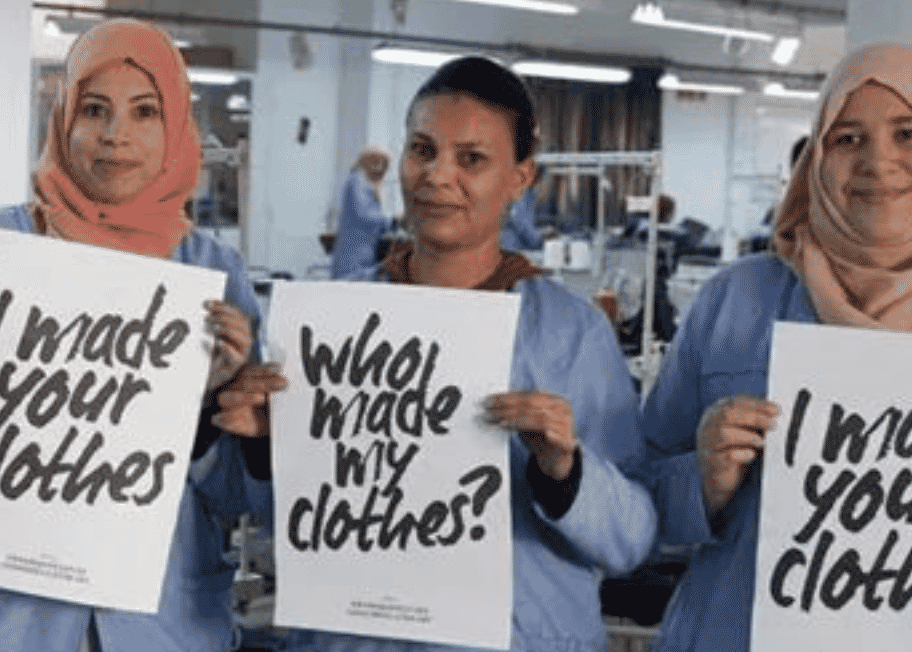
Most companies selling you Turkish clothing do not make it. That is the single most useful thing to understand before you send a brief, and it is not an accusation. Turkey has four distinct kinds of supplier, they all answer the same enquiry, and only one of them owns a sewing floor.
The distinction costs money in both directions. Buying through a trader when you needed a factory means paying a margin you cannot see. Going direct to a factory when you needed 40 pieces of ready stock means being told no by everyone you contact.
If you are still deciding on the country itself, start with the guide to clothing manufacturers in Turkey, which covers the duty position, the six clusters and what minimum order quantity is realistic. This guide covers the four supplier types and how each is paid, how to tell them apart before you pay anything, what the Istanbul wholesale markets actually sell, and the checks that take minutes and settle it.
Note: Turkey Clothing Factory is a group of documented clothing factories in Turkey, producing for brands from 100 units. Ranges in this guide are given as market ranges, not as quotes from a specific factory. Ranges come from published industry sources. We confirm exact MOQ and price with the factory when you send a brief.
Key takeaways
- Four supplier types answer the same enquiry: factory, trader, wholesale market seller and buying office. Only the factory owns machines.
- The trade registry record and the tax number settle which one you have, in about two minutes.
- Merter, Osmanbey and Laleli sell finished stock, not production. That is a different transaction from commissioning your own style.
- A trader is not a problem unless you did not know. The margin sits inside the quotation and you never see it itemised.
- Verification matters more each year: 2,147 Turkish textile and apparel businesses closed in one three-month period.
- If a supplier will not name the factory, you cannot audit it, visit it, or keep it when the arrangement ends.
- Ask who issues the A.TR. The answer tells you who the exporter of record really is.
What Are the Four Types of Clothing Supplier in Turkey?
Factory, trading company, wholesale market seller and buying office. They use overlapping language, they will each adopt whichever word you used first, and their economics are completely different. The label a company gives itself tells you nothing. The registry record and the invoice tell you a great deal.
| Type | How it earns | Whose side it is on | How to spot it |
|---|---|---|---|
| Factory | Making charge on your production | Yours, once the order is placed | Registry activity is manufacturing. Will give an address you can visit |
| Trading company | Buys from the factory, resells to you. Margin is inside the quote | Its own. You are the customer, not the principal | Registry activity is wholesale or foreign trade. Reluctant to name the factory |
| Wholesale market seller (Merter, Osmanbey, Laleli) | Margin on finished stock it already holds | Its own, and the transaction is simple | Sells by the piece from a showroom. No tech pack required |
| Buying office | A retainer or a percentage, usually from a larger brand | Yours, and it is expensive | Dedicated staff, often representing several brands |
Sources: Turkish trade registry classifications; Istanbul Apparel Exporters Association sector profile. Comparison describes how each model earns, not the quality of any individual company.
None of these is dishonest. A trading company that consolidates four factories for you is doing real work, and for a brand running several product types across Istanbul, Denizli and Corlu it may be the right answer. The problem is only ever paying for one model while believing you bought another, which is the same question that decides whether a sourcing agent is worth its fee.
Citation Capsule: Turkish clothing suppliers fall into four types: factories that own production, trading companies that buy and resell with the margin inside the quotation, wholesale market sellers in Merter, Osmanbey and Laleli who sell finished stock, and buying offices paid a retainer. The registered activity on the trade registry record distinguishes them, not the term the company uses for itself.
Skip the search: the Turkey factory directory ($39) lists documented factories by category, city and capability, with the verification status of each. One-time payment, instant download.
How Do You Tell a Factory From a Trader?
Three questions and one document. You do not need to visit Turkey to do this, and it takes about two minutes once you know what you are asking for. The checks work because a trading company cannot answer them the way a factory can without lying in writing, which most will not do.
Ask for the trade registry record and the tax number. The registered activity says manufacturing or it says wholesale and foreign trade. Compare the legal name against the name on the quotation, and against the name that will appear on the invoice. Three different names is three different companies.
Ask which factory makes it and where. A factory answers with its own address. A trading company either names its supplier, which is unusual, or explains why it cannot. Either answer is informative. Evasion is the informative one.
Ask who issues the A.TR certificate. This is the Turkey-specific question and it is the sharpest of the three. The A.TR is what lets your goods enter the EU duty-free (European Commission), and it is issued to the exporter of record. Whoever issues it is the company actually exporting, whatever the quotation says.
Ask for a certificate number, not a PDF. GOTS, OEKO-TEX, BSCI and SEDEX certificates are public and searchable. Check the number in the GOTS database or OEKO-TEX Label Check. Note whose name is on it. A trader quoting a factory's certificate is telling you something it may not intend to.
Citation Capsule: Four checks distinguish a Turkish clothing factory from a trading company. The registered activity on the trade registry record, and whether the supplier will name the producing factory and its address. Then who issues the A.TR movement certificate permitting duty-free entry to the European Union, and whose company name appears on the certification records in the issuing databases.
What Do the Istanbul Wholesale Markets Actually Sell?
Finished stock, by the piece, from a showroom. Merter, Osmanbey and Laleli are three distinct markets with different products and different buyers, and English-language sourcing content routinely treats them as one place called Istanbul. They are not interchangeable and they are not factories.
| Market | What it sells | Typical buyer | What it is not |
|---|---|---|---|
| Merter | Mid-market womenswear and menswear, broad range | Retailers buying stock to resell | Not a place to commission a style |
| Osmanbey | Higher-end womenswear, faster fashion turn | Boutiques and small chains | Not low-cost basics |
| Laleli | Volume-oriented, historically export-facing | Bulk buyers and exporters | Not small-batch or bespoke |
Sources: Istanbul Apparel Exporters Association; published market guides. Descriptions are directional. Individual showrooms vary widely within each market.
Buying wholesale from these markets is fast and it is legitimate. You see the product, you buy what exists, and there is no sampling round. What you cannot do is control the specification, and you are buying a garment that other brands can also buy.
Is that a problem? It depends entirely on what you are building. For a retailer filling a rail, no. For a brand whose fit and construction are the product, yes, and the wholesale markets will not get you there however many showrooms you visit.
Citation Capsule: Merter, Osmanbey and Laleli are three distinct Istanbul wholesale markets selling finished stock by the piece rather than production capacity. Merter carries broad mid-market range, Osmanbey higher-end womenswear, and Laleli volume-oriented export-facing goods. None of them commission garments to a buyer's own specification.
What Goes Wrong, and Why It Is Getting More Common
Suppliers disappear. The Turkish industry is contracting hard: 2,147 textile and apparel businesses shut down in a single three-month period, with more than 2,000 closing across 2024 (Textilegence, 2025). A company that was solid two seasons ago may not be trading when your deposit clears.
Why the sector is contracting and what the consolidation means for a buyer are covered separately. This changes the risk profile in a specific way. The classic sourcing worry is quality. In a contracting market the bigger worry is continuity: the factory that made your first run cannot take your second, or takes the deposit and then cannot buy fabric.
The deposit is the exposure. Standard terms are a deposit against a balance on documents or on delivery. That deposit is unsecured, and in a market losing companies at this rate the check on whether the company is trading is not optional diligence. It is the main control you have.
The subcontract is the second exposure. A factory taking work outside its cluster is subcontracting, and you may not be told. A company in Istanbul quoting terry towelling is buying it from Denizli. That is not fraud, and it does mean the quality control you arranged is happening somewhere you did not agree to.
Citation Capsule: The Turkish textile and apparel sector recorded 2,147 business closures in a single three-month period, with more than 2,000 companies closing during 2024 (Textilegence, 2025). In a contracting market the principal supplier risk shifts from quality to continuity: whether the company will still be trading when the deposit clears and the second order is placed.
How Do Payment Terms Work With Turkish Suppliers?
A deposit against a balance, and the balance timing is where the negotiation actually happens. Market ranges from published industry sources put typical terms at 30 to 50 percent up front with the rest before shipment or against documents, and individual suppliers vary either side of that. The deposit is unsecured, which is why the checks in the previous section are the real protection rather than the contract.
| Arrangement | Typical shape | Who carries the risk |
|---|---|---|
| Deposit and balance before shipment | 30 to 50 percent up front, balance on completion | You, until the goods leave |
| Deposit and balance against documents | Balance released when shipping documents are presented | Shared. The common arrangement |
| Letter of credit | Bank-mediated, paid on compliant documents | Shared, at a cost both sides pay |
| Open account | Payment after delivery, on terms | The supplier. Rare on a first order |
Market ranges compiled from published industry sources, not terms quoted by any named supplier. Terms vary by order size, product and how long the relationship has run.
Two things are worth pushing on. First, tie the balance to documents rather than to a date, because a date rewards a supplier for declaring completion. Second, ask whether the deposit funds fabric, because in a tight market a factory may be using your deposit to buy cloth it cannot otherwise finance.
That second question sounds impolite. It is normal commercial diligence, and a factory with working capital answers it without difficulty. One that hesitates has told you something useful about the continuity risk in the section above.
Citation Capsule: Market ranges from published industry sources put Turkish apparel supplier deposits at 30 to 50 percent, with the balance due before shipment or against documents. The deposit is unsecured, which makes pre-payment verification of the company the principal control available to the buyer rather than the contract itself.
Which Supplier Type Do You Actually Need?
It depends on three things: whether you have a specification, how many pieces you need, and whether the fit is the product. Most brands get this wrong in the same direction, approaching factories when they wanted stock or markets when they wanted production.
| Your situation | Go to | Why |
|---|---|---|
| You have a tech pack and want your own fit | Factory | Only a factory makes to your specification |
| You need stock on a rail in three weeks | Wholesale market | It already exists. No sampling round |
| Several product types across different clusters | Trading company | Coordination is the service, and it is real work |
| Large, continuous programme with your own QC needs | Buying office | Dedicated capacity, and it costs accordingly |
| One style, 100 to 300 pieces, first order | Factory, via a group | Factories rarely answer small first enquiries directly |
Directional guidance based on how each model earns and what it can deliver. Ranges come from published industry sources. We confirm exact MOQ and price with the factory when you send a brief.
What each model costs you
- Factory: a making charge you can see, and a minimum you may not meet alone
- Trading company: a coordination margin inside the quote, worth it across several clusters
- Wholesale market: speed, at the price of a garment other brands can also buy
- Buying office: dedicated capacity, priced for continuous programmes
None of these is the wrong answer. Paying for one while believing you bought another is.
That last row is the honest one. A factory receiving a cold enquiry for 150 pieces from a brand it has never heard of will usually not reply, not because the order is too small but because the enquiry is expensive to evaluate. That is the gap a factory group fills, and it is the only reason one should exist.
Five checks before you pay a deposit
- Trade registry record shows manufacturing, not wholesale or foreign trade
- Tax number matches the company that will invoice you
- Who issues the A.TR answered plainly, if you are selling into the EU
- Certificate numbers checked in the issuing database, with the name on them noted
- Factory address given, and it sits in the right cluster for the product
Three different company names across the quotation, the invoice and the certificate means three different companies. Ask which one you have a contract with.
No tech pack yet? Factories quote from specifications, not from photographs. A factory-ready single-style tech pack is $79: measurements, construction, fabric, trims and labelling in the format a Turkish factory costs from.
Does the Supplier Type Change Your Duty Position?
Not the rate, but it changes who controls the paperwork, and that is nearly as important. Turkish apparel enters the European Union at zero duty under the Customs Union and the United Kingdom at zero tariff under the 2021 agreement (UK Government). Both depend on documents somebody has to issue correctly.
The full duty picture by destination is set out in the Turkey manufacturing guide. For the EU, the document is the A.TR movement certificate, and since 8 July 2024 member states accept it issued electronically with a QR code (European Commission, 2024). It is issued by the exporter of record, so if a trading company is exporting, the trading company controls it.
For the UK the test is rules of origin rather than free circulation, which is a materially different question and depends on where the fabric came from. A supplier who has never issued a UK statement on origin can learn, and you want that established before the goods are made rather than after.
The practical consequence is simple. If the company you are paying is not the company exporting, you have a dependency you did not price. Ask early, in writing, and keep the answer.
Citation Capsule: The supplier type does not change the duty rate on Turkish apparel but does determine who controls the documentation. The A.TR movement certificate permitting duty-free entry to the European Union is issued by the exporter of record, so where a trading company exports, it controls the certificate rather than the manufacturer.
Choosing Between Turkish Clothing Suppliers
Decide what you are buying before you decide who from. Production to your own specification means a factory. Stock on a rail means the Istanbul markets. Coordination across clusters means a trading company, and that is a legitimate service worth paying for when you actually need it.
Then verify, because the industry is losing companies and the deposit is your exposure. The trade registry record, the tax number and the certificate numbers take minutes between them, and they answer the question that matters: is this company real, and is it the one that will make and export my goods?
And ask to be told the factory's name in your own paperwork. Not a photograph of a building, not a company profile, but the producer named on the documents you will hold. It costs the supplier nothing if the answer is straightforward, it makes independent verification possible, and the relationship survives whoever introduced you.
Frequently Asked Questions
How do I know if a Turkish supplier is a factory or a trading company?
Ask for the trade registry record and the tax number. The registered activity says manufacturing, or it says wholesale and foreign trade. Then ask who issues the A.TR certificate, because that is issued by the exporter of record and identifies the company actually exporting your goods.
Can I buy directly from the Istanbul wholesale markets?
Yes. Merter, Osmanbey and Laleli sell finished stock by the piece from showrooms, with no sampling round and no tech pack required. What you cannot do there is control the specification, and the garments you buy are available to other brands as well.
Is buying through a Turkish trading company a bad idea?
No, provided you know that is what you are doing. A trading company coordinating several factories across Istanbul, Denizli and Corlu is doing real work. The issue is only ever paying a coordination margin inside the quotation while believing you bought direct from the producer.
Why will Turkish factories not reply to my enquiry?
Usually because evaluating a small first enquiry from an unknown brand costs the factory more than the order is worth, not because the quantity is too low. Factories running at capacity prioritise accounts they know. This is the gap a factory group exists to close.
What is the biggest risk with Turkish suppliers right now?
Continuity rather than quality. The sector recorded 2,147 textile and apparel business closures in a single three-month period, with more than 2,000 during 2024. The deposit you pay is unsecured, so checking the company is still trading is the main control you have.
Send the product, the quantity by colourway, and where the goods are landing. We route the brief to the factory in our group built for that product, normally within 24 hours. You work directly with the factory and the factory bills you directly. No commissions. No markups. The factory bills you directly.
Get in contact Download the directory ($39)Need a tech pack? Get a factory-ready single-style tech pack for $79. See what's included.
Editorial note: all company names, certification marks and trademarks referenced here are the property of their respective owners. MOQ, cost and lead-time figures are market ranges compiled from the published sources listed below, not quotes from any individual factory, and they vary by product, fabric and season. Tariff figures were correct at the date of publication and the position continues to move. Always verify your own HTS classification and confirm terms directly with the factory before committing.
Sources
- Sheng Lu, FASH455, University of Delaware (2025): WTO-based analysis of global textile and apparel trade.
- US Census Bureau: Trade in Goods with Turkey, the official monthly import and export series.
- European Commission, Access2Markets: the EU-Turkey Customs Union and what it covers.
- European Commission, Taxation and Customs Union (2024): electronic A.TR movement certificate rules.
- Irish Revenue: Turkey Customs Union and preferential origin, including A.TR and EUR1 treatment.
- Istanbul Apparel Exporters Association: Turkish apparel export sector profile and membership.
- Global Organic Textile Standard: public database of GOTS-certified suppliers.
- Textile Exchange: certified company finder for recycled content and responsible fibre standards.
- OEKO-TEX Label Check: public verification of certificate numbers.
- amfori BSCI: social audit system documentation.
- USITC Harmonized Tariff Schedule: the current classification schedule and duty rates.
- US Customs and Border Protection: tips for new importers, including importer-of-record responsibility.
- European Commission, Directorate-General for Trade (2025): EU trade relations with Turkey, including bilateral trade values and partner ranking.
- UK Government: summary of the UK-Turkey trade agreement, in force since 1 January 2021.
- Textilegence (2025): reporting on Turkish textile and apparel business closures.
